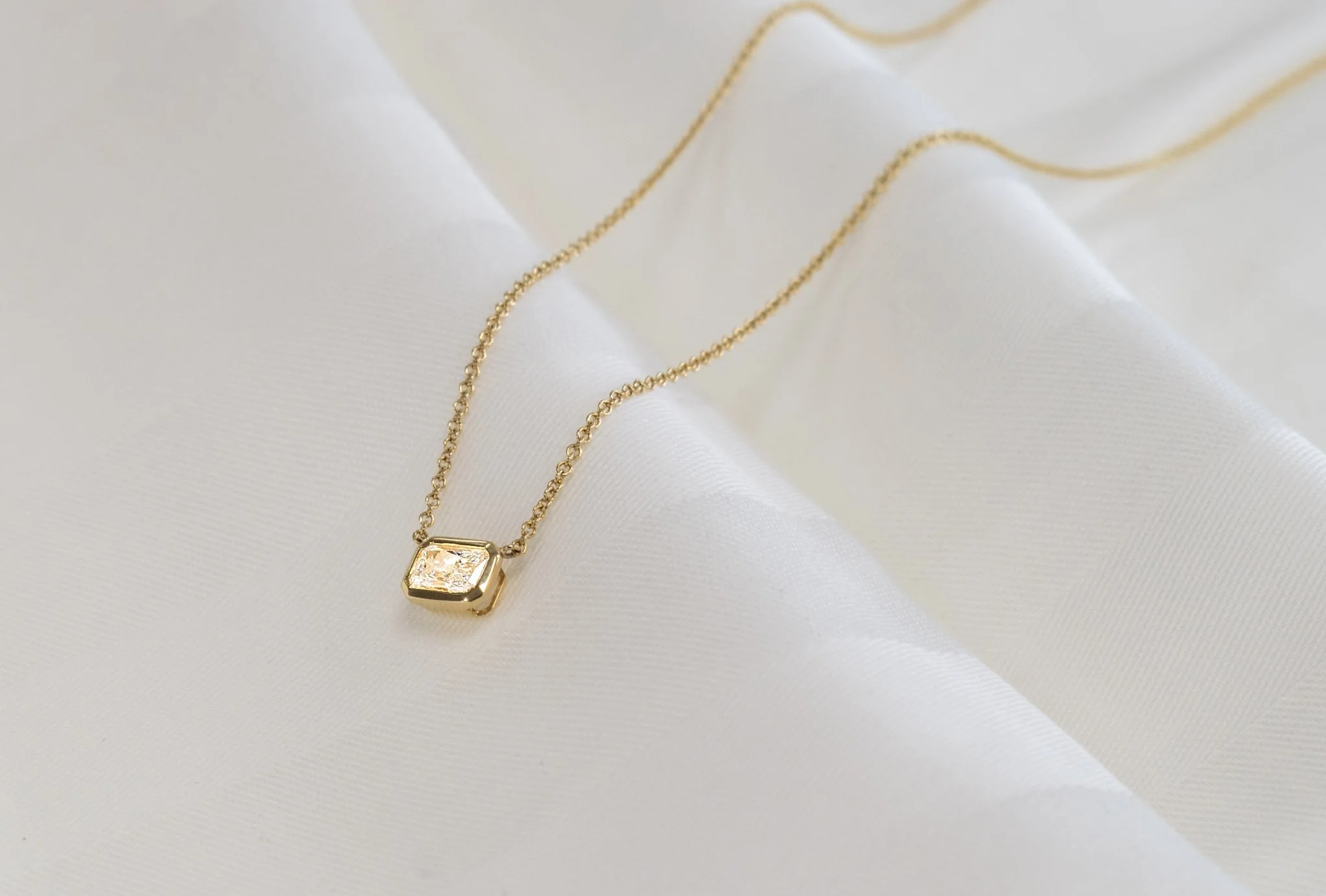
Diamonds and Alternatives
There are more options on the market today than ever before. Here's a straightforward breakdown.
When choosing, there is no universally right answer. The best stone is the one that fits your priorities.
If longevity, rarity, and value retention matter most: natural diamond.
If you want a real diamond at a lower price and resale value is not a concern: lab-grown diamond.
If you want maximum sparkle and durability on a budget: moissanite.
If it's for fashion jewelry or occasional wear: CZ is fine.
If you want a natural stone that isn't a diamond: white sapphire is worth considering.
Come in and we'll show you examples side by side. Seeing them in person makes the decision a lot easier.
-
Natural diamonds are formed over billions of years under extreme heat and pressure deep in the earth. They are graded by cut, color, clarity, and carat weight and certified by independent laboratories such as the Gemological Institute of America. No two are identical.
-
Lab-grown diamonds are chemically, physically, and optically identical to natural diamonds. They are real diamonds. The only difference is where they came from. They are graded and certified the same way natural diamonds are and typically cost significantly less, which means you can get a larger or higher quality stone for the same budget.
-
Moissanite is not a diamond. It is a separate gemstone, originally discovered in a meteor crater, and now produced almost entirely in labs. It scores a 9.25 on the Mohs scale and is extremely durable for everyday wear.
Moissanite has more brilliance and fire than a diamond, meaning it reflects more light and produces more colorful flashes. Some people love that look. Others find it reads as less refined compared to a diamond's more subdued sparkle. It is significantly less expensive than both natural and lab-grown diamonds and holds up well over time.
-
Cubic zirconia is a synthetic stone made from zirconium dioxide. It looks like a diamond at a glance but is much softer, scoring around an 8 to 8.5 on the Mohs scale. It scratches, clouds, and dulls over time with regular wear.
CZ is inexpensive and works well for fashion jewelry or pieces that aren't meant to be worn daily. It is not a practical choice for an engagement ring or anything intended to last decades.
-
White sapphires are natural gemstones that are colorless or near-colorless. They score a 9 on the Mohs scale and are durable enough for everyday wear. They have less brilliance than a diamond and tend to look slightly softer, but they are a legitimate natural stone at a lower price point than diamonds. They appeal to people who want a mined stone without the diamond price tag.